

Developed by Defcon Films Australia
CHEAP PPF VS PREMIUM PPF
Where the price gap sits, line by line.
Cheap PPF vs premium PPF is not a question of the roll price alone. The real cost of a film is the roll plus the reinstalls, the claims with no procedure behind them and the hours lost to film that tears on a stretch. Some low-cost film is still a fair buy, so this page compares the two on five published lines: base material, thickness and puncture, self-healing, UV testing and warranty procedure. Defcon publishes its own numbers on each line, so you can hold any supplier, including us, to the same sheet before you stock a roll.
The Price Of A Roll
Is Not The Price Of The Job
A cheaper roll looks like margin until the first yellowed bonnet comes back. The real cost of a film is the roll price plus the reinstalls, the claims with no procedure behind them and the hours lost to film that tears on a stretch.
That does not make every low-cost film a bad buy. It means the comparison should be made on five published lines, not on the invoice total.
Line One:
Base Material
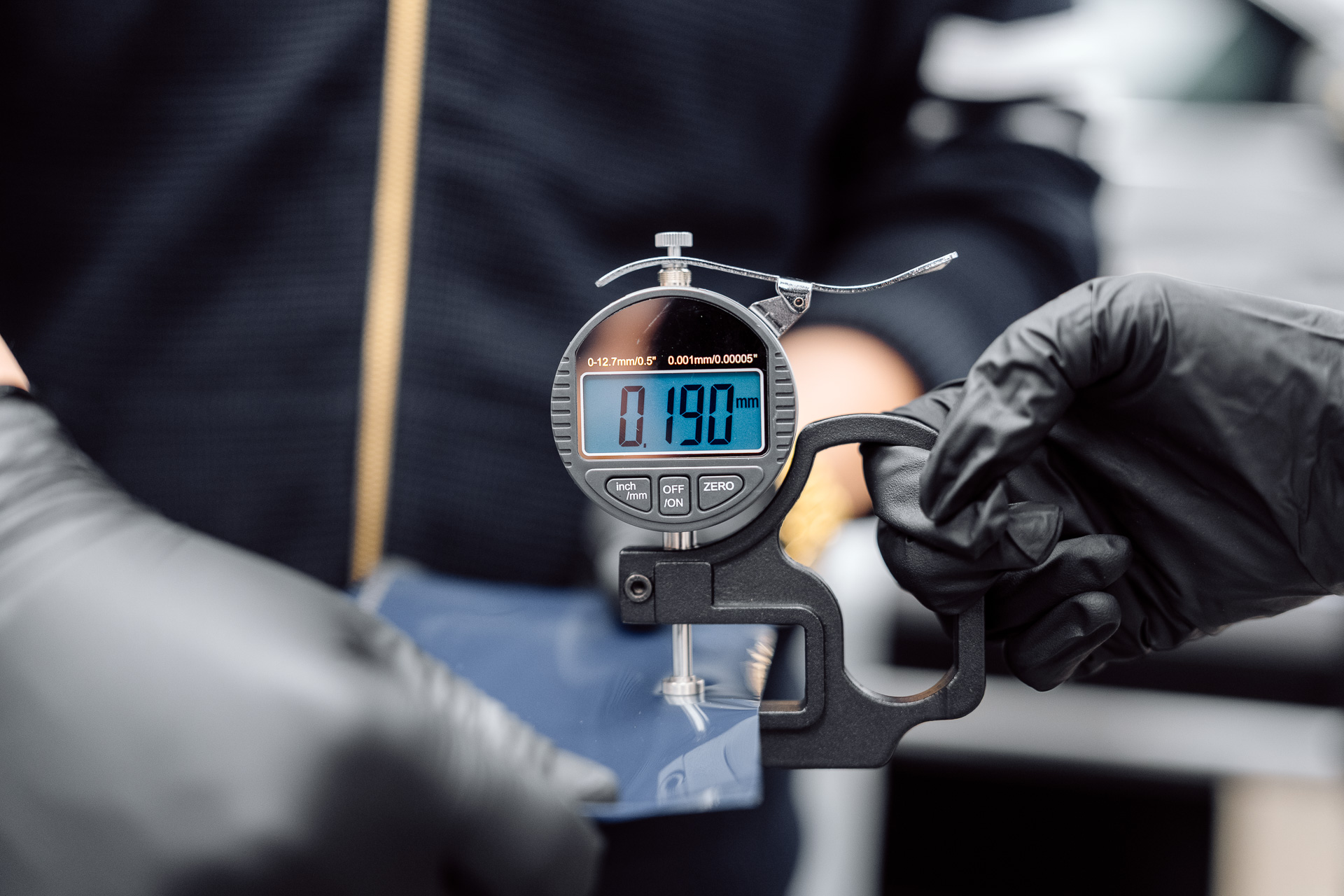
Aliphatic TPU resists yellowing under UV; aromatic TPU and TPH constructions are cheaper to make and yellow sooner in Australian sun. The TPU vs TPH guide explains the chemistry. Defcon's gloss lines are aliphatic TPU.
Ask the supplier which it is in writing. A spec sheet that says only "TPU" has not answered the question.
Line Two:
Thickness And Puncture
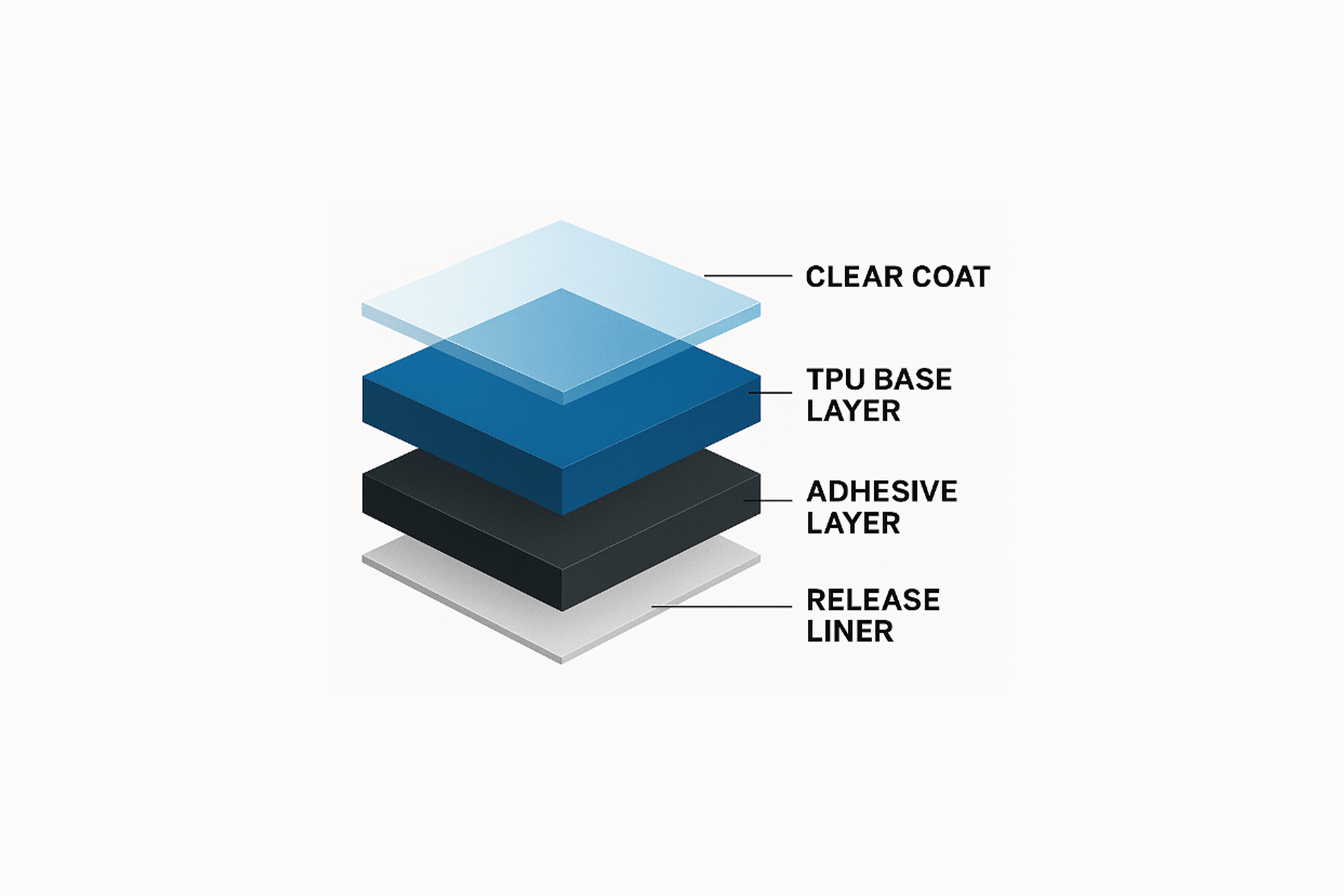
Defcon's gloss construction is 190 microns ±10% in total (about 7.5 mils) with single-point puncture resistance close to 10 kg. Thinner film costs less per roll and gives up stone-chip resistance on exactly the panels customers pay to protect. The specifications guide shows how to read these numbers.
Line Three:
Self-Healing Depth
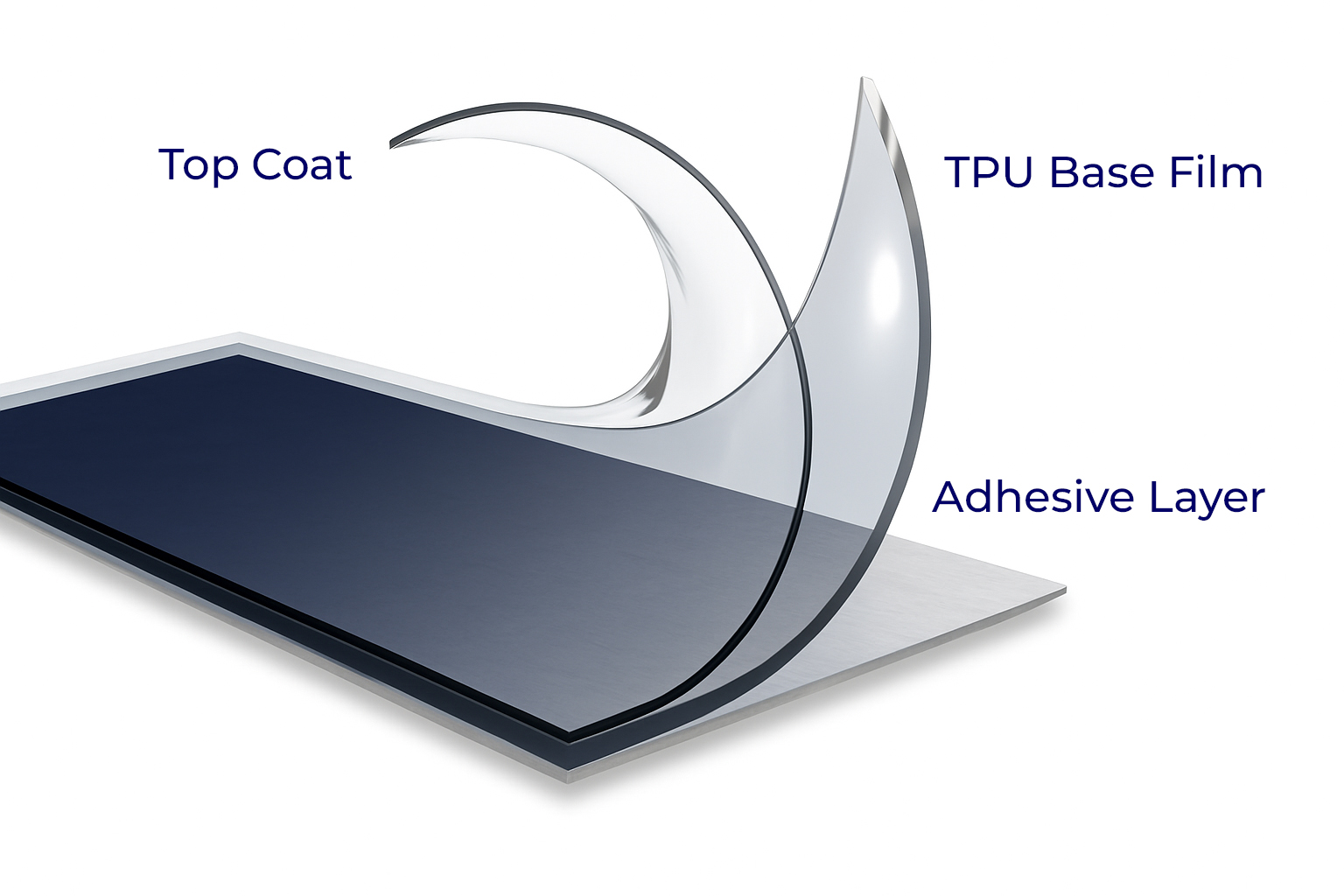
A self-healing top coat is only as useful as it is thick. Defcon's is 13 microns: scratches contained in that layer recover under heat, anything deeper is permanent. A film that advertises self-healing without stating the depth is leaving the number out for a reason.
Line four is UV testing. ARPANSA tested Glanz clear TPU film in Melbourne, reference UVR_25-0370-1, recording 99.0% of UV blocked. A premium claim without a published report is a marketing claim.
Line Five:
Warranty Procedure
Warranty years mean little without a procedure. Defcon ONE carries 12 years, Glanz and Frozen 10, Spectra 7, Crystal Shield and FleetArmour 3, and CoolVue a lifetime limited warranty, with terms on the warranty page.
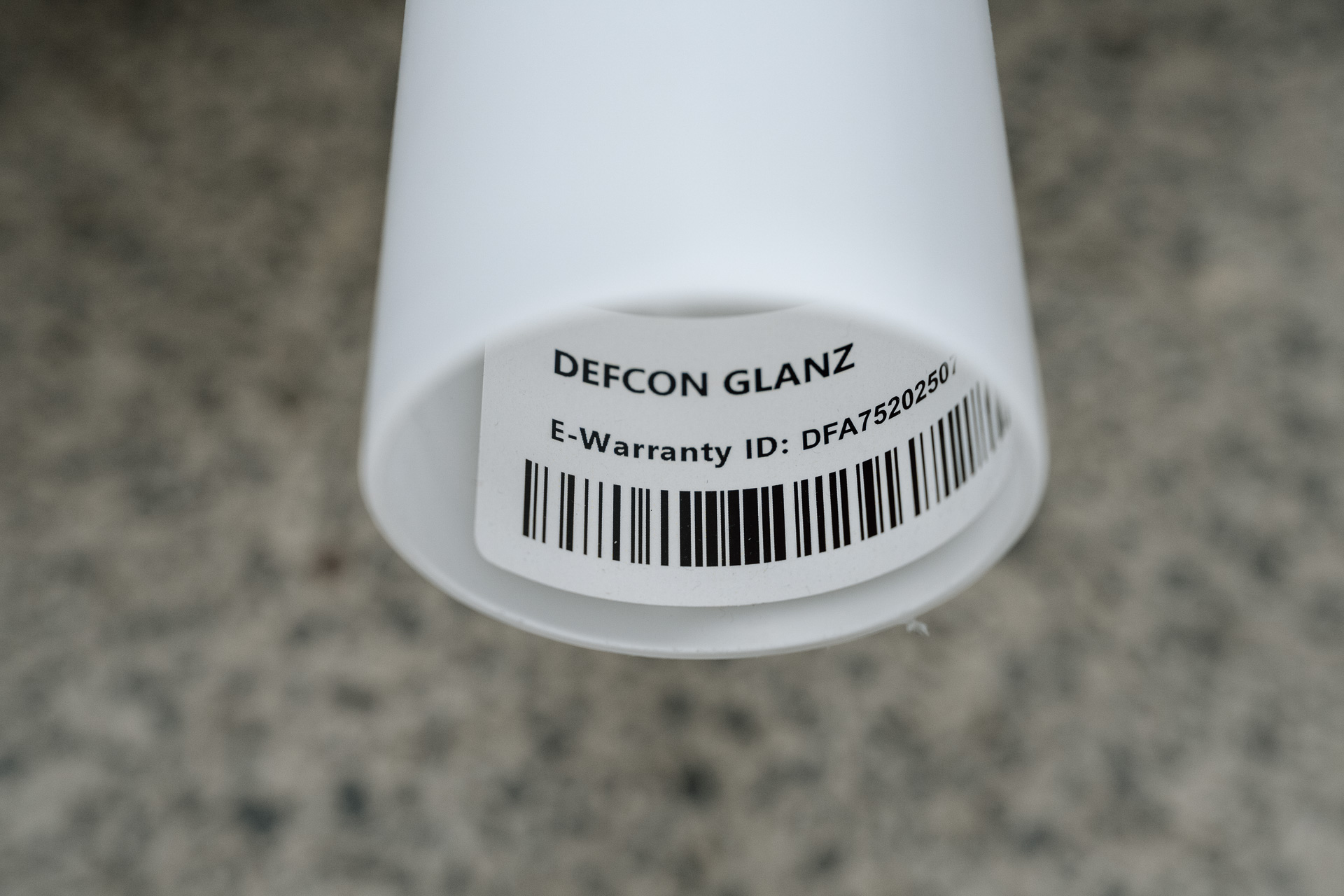
Every roll is serialised and every job registered through e-Warranty within 7 days of invoice. A cheap roll with no serial number has no claim path, so the installer carries the whole risk.
The warranty guide also lists what is installation related, so the shop knows which faults are its own.
Where Low-Cost
Film Makes Sense
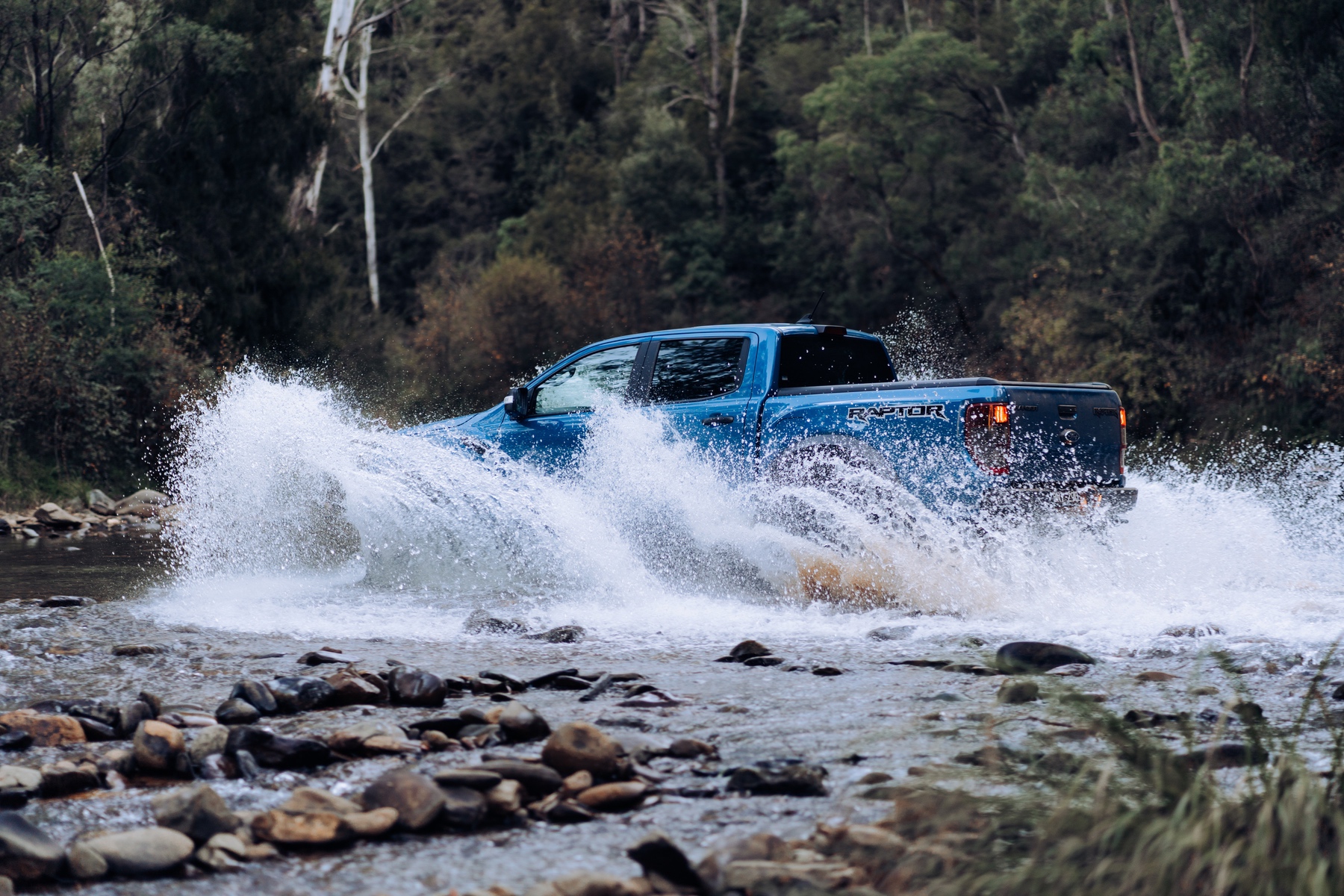
Sacrificial coverage. FleetArmour is priced for tray sides, sills and rock sliders on 4WD and fleet vehicles: a layer that is replaced when worn rather than repaired, with a 3-year limited warranty. That is cost-efficient film used for the job it was built for.
The mistake is putting coverage film on a showroom bonnet, or paying showroom film prices for a mine-site ute.

Test The Claim
In Your Workshop
A free sample roll costs nothing to compare against whatever you stock today. Roll prices are listed ex. GST in the online shop, no account needed, with free shipping over $1000 ex. GST.
The brands comparison framework turns the five lines into a scorecard.
FAQ
-
Is cheap PPF always a bad choice?
No. Sacrificial film such as FleetArmour is the right buy for tray sides, sills and fleet panels that get replaced when worn. The mistake is using coverage film where the customer is paying for finish and longevity.
-
What is the main difference between cheap and premium PPF?
Base material first: aliphatic TPU resists yellowing, aromatic TPU and TPH do not. Then thickness, self-healing depth, published UV testing and a warranty procedure with serial numbers.
-
How thick should a gloss PPF be?
Defcon's gloss lines are 190 microns ±10% in total, about 7.5 mils, with single-point puncture resistance close to 10 kg. The specifications guide explains how to compare.
-
Does cheap PPF yellow?
Film built on aromatic TPU or TPH yellows sooner under UV. Ask any supplier for the base material in writing and for a published UV test such as the ARPANSA report on Glanz, reference UVR_25-0370-1.
-
What does a warranty need to be worth anything?
A serial number on the roll, a registration step and a written claim procedure. Defcon registers every job through e-Warranty within 7 days of invoice.
-
Can I test a premium film before paying for a roll?
Yes. Request a free sample roll and run it against your current film on the same panel.
-
Do you offer support in Chinese?
Yes. Bilingual consultation in English and Chinese is available through our WeChat channel, covering product selection, ordering and technical questions. 我们提供中英双语咨询。
Developed by Defcon Films Australia
Every Defcon film is built for Australian conditions: materials selected globally, proven on local roads, and made to install well.