

PPF Slip Solution and Water Quality: What Hard Water Leaves Behind
A PPF slip solution can only be as clean as the water in the bay around it: the rinse that dried on the panel, the water in the sprayer, the wipe before film goes down. Australian water is not the same from one supply zone to the next. Total hardness in major Australian reticulated supplies runs from about 5 mg/L to about 380 mg/L as calcium carbonate, according to the Australian Drinking Water Guidelines. Those minerals stay on the surface once the water dries. Squeegee film over them and the mark is permanent until the panel is stripped and refitted, and the fix is on you: moisture haze, water pockets and dust contamination are listed as installation related on the Defcon warranty guide, which is the list of things a film warranty does not cover.
What hardness is, and why two shops get different panels
Hardness is the concentration of calcium and magnesium salts in water, reported as milligrams per litre of calcium carbonate. Western Australia’s Water Corporation describes the visible result without any jargon: hard water may leave spots on drinking glasses, shower screens or garden plants, because the minerals remain after the water has evaporated. A rinsed bonnet drying in an open bay is doing the same thing as a shower screen, with a customer attached to it.
The national guidelines put numbers on the bands:
| Total hardness as calcium carbonate | How the guidelines describe it |
|---|---|
| Under 60 mg/L | Soft, but possibly corrosive |
| 60 to 200 mg/L | Good quality |
| 200 to 500 mg/L | Increasing scaling problems |
| Over 500 mg/L | Severe scaling |
The guideline value for drinking supplies is 200 mg/L, set to keep scale out of hot water systems rather than off paint. For an installer the useful part is the spread. A shop on a very soft supply can run sloppy water habits for years and never see a spot. A shop at the hard end of that range, on the same film and the same technique, sees residue every summer and blames the roll. The film did not change. The water did.
Hardness also varies inside a city, because supply zones draw from different sources. That is why the number that matters is your own street’s number, not a figure someone quoted for your state.
Where water actually enters a PPF job
Water touches the work at five points, and only one of them is the sprayer:
- The wash before the car comes inside.
- The rinse after decontamination, which is the pass most likely to dry on its own while the installer sets up.
- The slip solution in the sprayer during positioning.
- The last wipe before film goes down.
- The inside of the sprayer keg itself, where hard water dries between jobs and leaves scale that comes back out through the gun.
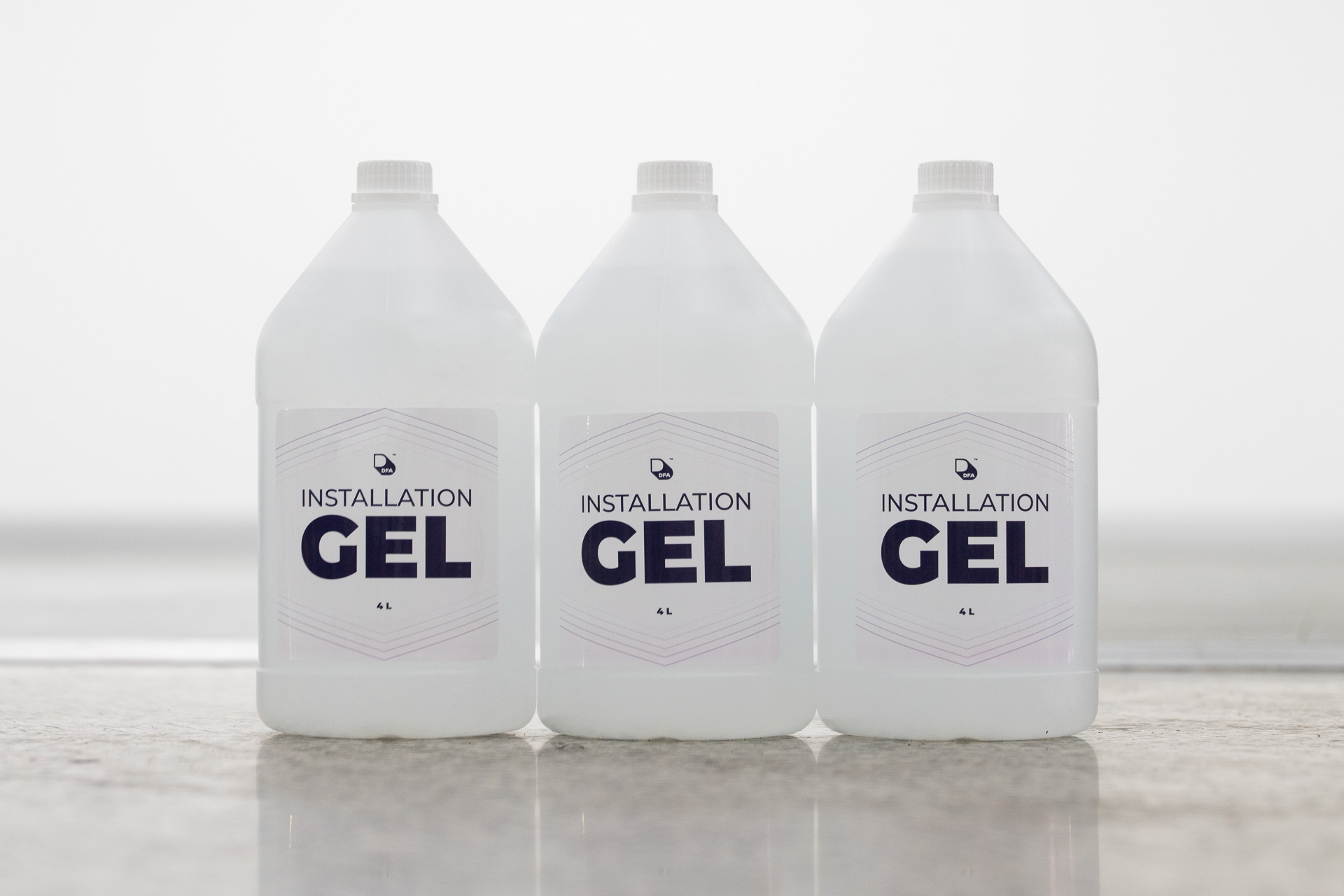
Preparation is stage one of the five stage install process for this reason, and it is also a warranty condition: cover requires a clean, contaminant free surface, which is what DFA Surface Cleaner is for in 24 x 650 mL cans. DFA Installation Gel is the pH neutral slip solution built for the positioning stage, supplied as 4 x 4L bottles. Neither product can do anything about minerals that were already on the panel when they arrived.
Once film is tacked off, position is final. Defcon Glanz is aliphatic TPU at 190 microns with a 10 per cent tolerance, carrying a 13 micron self healing top coat. Heat pulls handling marks out of that top coat. Nothing pulls a mineral speck out from under the adhesive. The only correction is removal and a new piece of film, which costs material, bay time and a conversation with the owner.
Reading the panel: water problem or technique problem
Water shows a pattern that technique does not. Spotting from a dried rinse follows gravity and airflow: lower edges of panels, the shadow under badges and mirrors, the run lines where a blower pushed water sideways. It appears before the film goes on, if anyone looks at the paint under a torch instead of through it. It repeats across different installers and different rolls in the same bay, and it gets worse in summer, when a hot panel dries a rinse faster than anyone can towel it off. On black and dark grey cars it is obvious, on silver it hides until the light changes at handover.
Two checks settle it. Let a sprayer of your normal water dry on a clean sheet of glass or a spare mirror and look at it under a work light. Then run one panel with deionised water from a drum and the next with tap water, same installer, same roll, same day. If the deionised panel comes up clean, the variable is the supply, not the hands.
Get the actual figure as well. Most Australian water retailers publish hardness for each supply zone in an annual drinking water quality report, and Water Corporation asks customers to phone its faults line for the number covering their area. Compare what you are told against the bands above, and you know whether your bay is working on soft water, good quality water or something that needs help.
What to change in the shop
None of this needs a new workflow. It needs water to stop drying where film is about to go.
- Work one panel at a time. Rinse, blow down, dry with clean towels, then film. Water that never dries on paint cannot leave anything behind.
- Make the final pass an approved cleaner rather than another water wipe, so the last thing on the surface is a product that flashes off clean.
- On a hard supply, put filtered or deionised water in the sprayer and use it for the final rinse. A drum of it is cheaper than one refitted bonnet.
- Ask your supplier how the slip product is meant to be prepared instead of inventing a ratio from a forum post. Viscosity is part of how the film slides and tacks off.
- Empty and dry the sprayer at the end of the week. Scale inside the keg ends up on paint eventually.
- Register every job through the e-Warranty portal within 7 days of invoice, so a genuine material defect stays separable from an installation issue when a claim comes back months later.
If you are training new installers, prep discipline is the part worth drilling hardest, because it is invisible at handover and expensive at week six. Our PPF training runs through the same sequence, and a free sample roll lets a workshop test film and water habits together before committing to a full order.
Does hard water damage paint protection film?
No. Hardness is dissolved calcium and magnesium, not something that attacks TPU or its adhesive. The damage is cosmetic and it happens at the interface: minerals left on the paint get sealed under the film, and minerals left on the film surface dry as visible spotting that the customer reads as a film fault. Under the film, it can only be fixed by refitting the panel.
Can I use tap water for a PPF slip solution?
In most Australian supplies, yes, provided water never dries on the panel by itself. The national guidelines treat 60 to 200 mg/L as good quality water, and plenty of Australian supply zones sit well below that. If your supply reads near or above the 200 mg/L guideline value, switch the sprayer and the final rinse to filtered or deionised water, and keep the slip product itself exactly as your supplier specifies.
How do I find out how hard my workshop’s water is?
Ask your water retailer for the hardness of your supply zone, or open their annual drinking water quality report, where hardness is listed with the other chemical parameters. In Western Australia, Water Corporation gives the figure over the phone. One number, once, tells you whether water is a real variable in your bay or something you can stop thinking about.