

Developed by Defcon Films Australia
PPF SPECIFICATIONS EXPLAINED
Thickness, self-healing, UV testing and what the numbers mean.
Read The Spec Sheet
Like An Installer
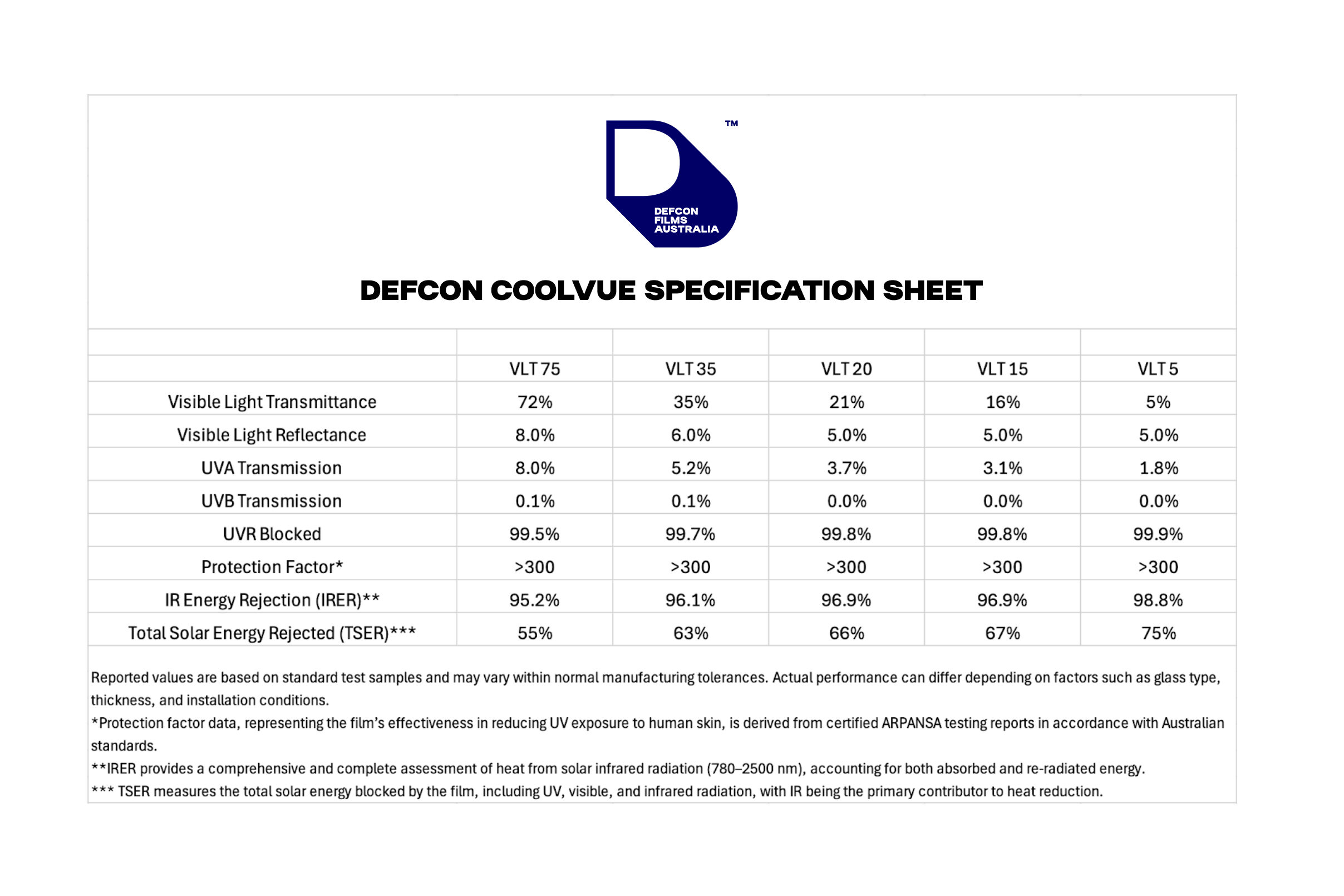
Every PPF brochure quotes numbers; fewer explain what they mean on a car. This page walks the Defcon spec as a worked example so the vocabulary transfers to any sheet on your desk.
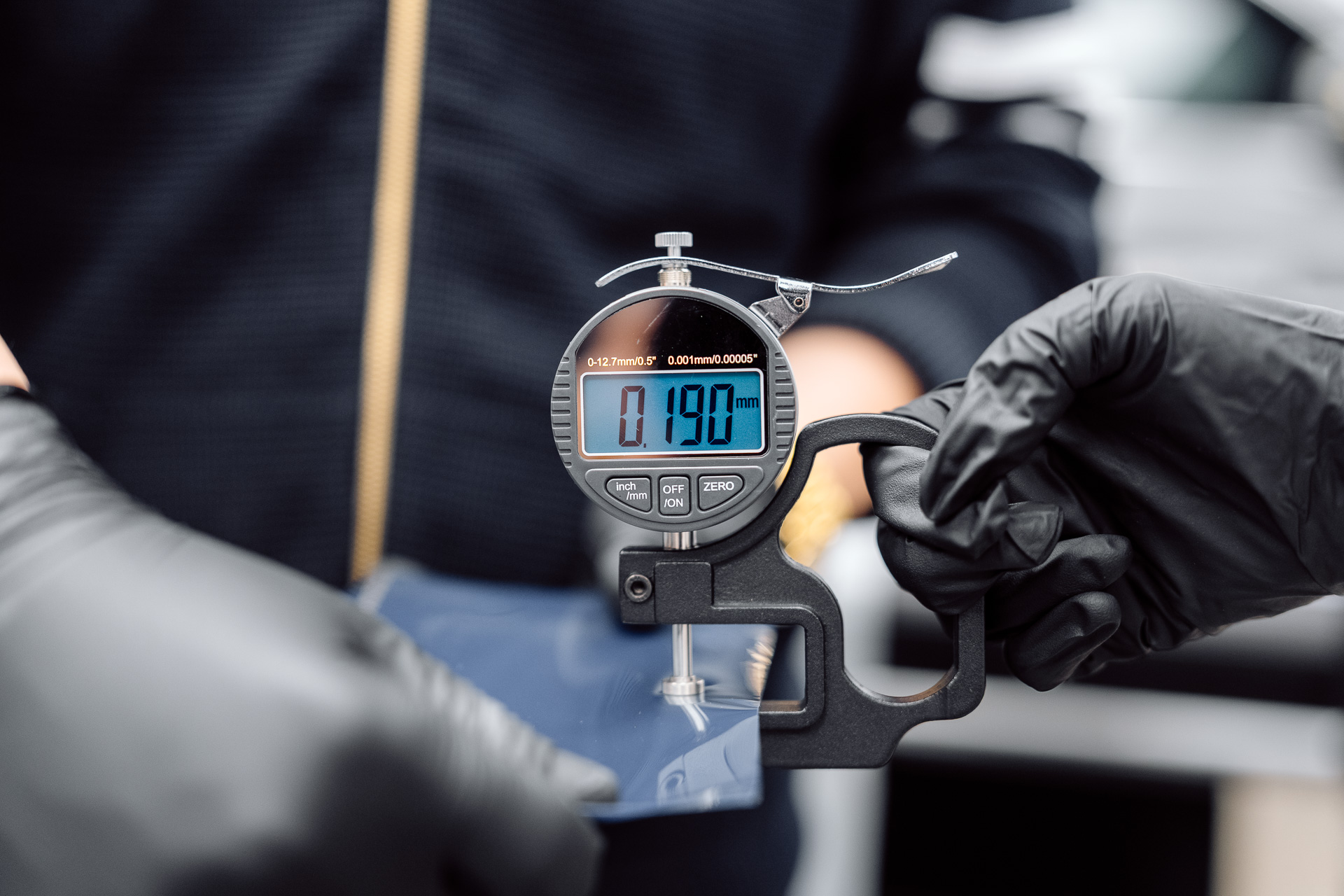
Total thickness: 190 microns ±10%, about 7.5 mils, the balance point between optical clarity, stretch and protective depth.
The Numbers That
Do The Work
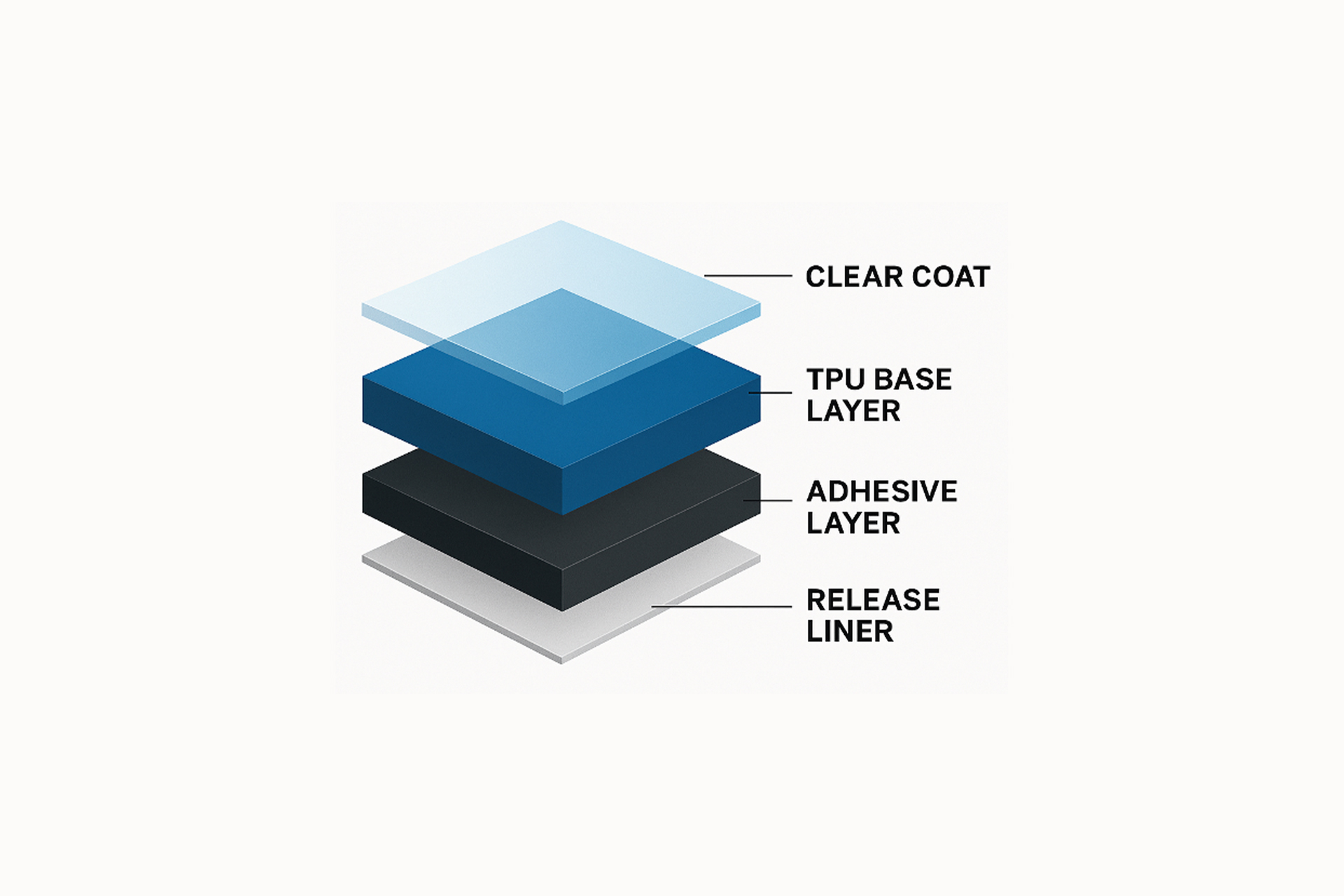
Puncture resistance close to 10 kg on a single point is the stone-chip line item. The 13-micron self-healing clear coat is the wash-mark line item: damage within it heals under heat, damage through it means replacing that section.
UV protection was measured by ARPANSA on eight Glanz specimens with a Varian Cary 60 spectrophotometer: UVB transmission 0.2%, UVA transmission 19.8%, 99.0% of UV blocked, protection factor 95 (50+), reference UVR_25-0370-1, analysis date 15 September 2025. The report is on the ARPANSA article. Adhesive behaviour is the other number installers ask about: easy tack, repositionable, grips once placed.
Spec Language vs
Warranty Language
A spec is a promise about material; a warranty is a promise with a procedure. Defcon publishes both: line-specific cover up to 12 years, claims requiring invoice, e-Warranty record, vehicle details and photos.
When a sheet quotes big numbers with thin warranty pages, the gap is the answer.
Film Construction
& Testing
Read the gloss spec sheet this way: aliphatic TPU is the base material, 190 microns ±10% (about 7.5 mils) is the total film thickness including the top coat, close to 10 kg is the single-point puncture figure, and the 13-micron self-healing layer is the part that heals minor scratches when heat is applied.
UV protection is lab tested by ARPANSA, the Australian Radiation Protection and Nuclear Safety Agency, with an adhesive tuned for repositioning during install. These are the numbers customers ask about. Quote them straight from this page. The film stretches over curves and contours without lifting, and the easy-tack adhesive slides during positioning then grips once placed, which shortens installation time on complex panels. Choosing between film chemistries? Read TPU vs TPH PPF.
Warranty
By Film Line
The warranty term on a spec sheet reflects how the construction is expected to age. Defcon lists a limited warranty by line: 12 years for Defcon ONE, 10 years for Glanz and Frozen, 7 years for Spectra colour PPF, 3 years for Crystal Shield and FleetArmour, and a lifetime limited warranty for CoolVue window tint, all conditional on normal use and proper installation. Read the warranty page before quoting a term to a customer.
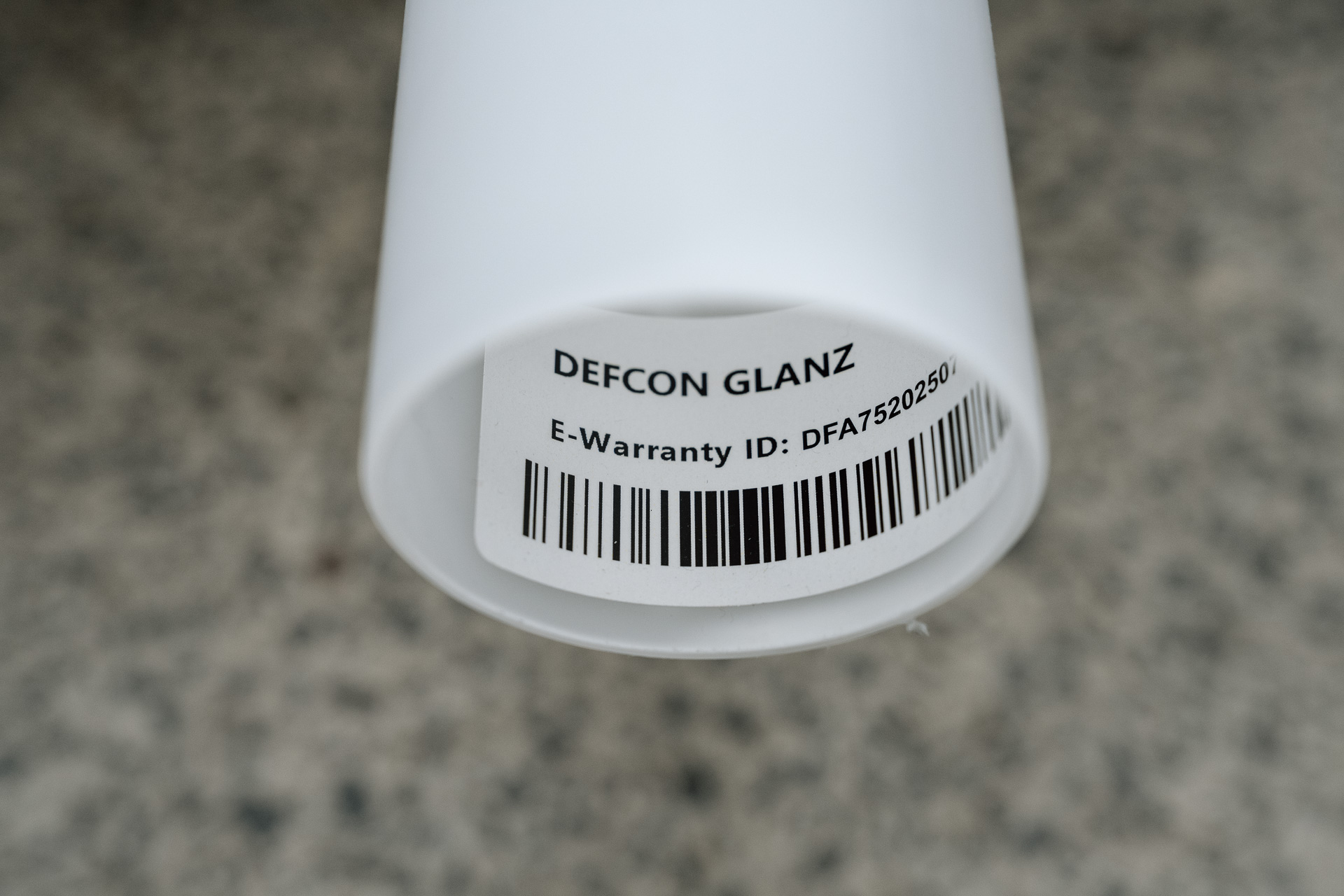
The spec is backed by a record: every roll and install goes into e-Warranty within 7 days of invoice.
The exclusions that sit behind these numbers are on the warranty page.

FAQ
-
How deep a scratch will the film self-heal?
The self-healing clear coat is about 13 microns thick. Scratches contained in that layer repair with heat from sunlight or warm water. Anything that cuts through the clear coat is permanent, and that section should be replaced.
-
Will the film yellow over time?
Defcon ONE is backed by a 12-year warranty against yellowing, and abnormal or premature yellowing is treated as a manufacturing defect under warranty. Proper care maintains clarity through the film's lifespan.
-
How long does the film last?
Defcon ONE carries a 12-year warranty and Glanz a 10-year warranty covering yellowing, staining, bubbling, peeling and cracking, so the film you sell is warranted for close to the ownership life of most vehicles.
-
Can the film go on surfaces other than cars?
Yes. Defcon PPF installs on any smooth painted surface, which is why sign writers and asset owners use it beyond vehicles. Chrome is also workable: test a small patch first and show the customer before wrapping the full trim.
-
Can I test the film before ordering?
Yes. Request a free sample roll and run it through your own installation process, or order the Defcon Practice Pack to train on real film before touching customer stock.
-
How do I open a trade account?
When the numbers check out on your bench, open a trade account through the contact page and order from the online shop.
Developed by Defcon Films Australia
Every Defcon film is built for Australian conditions: materials selected globally, proven on local roads, and made to install well.