

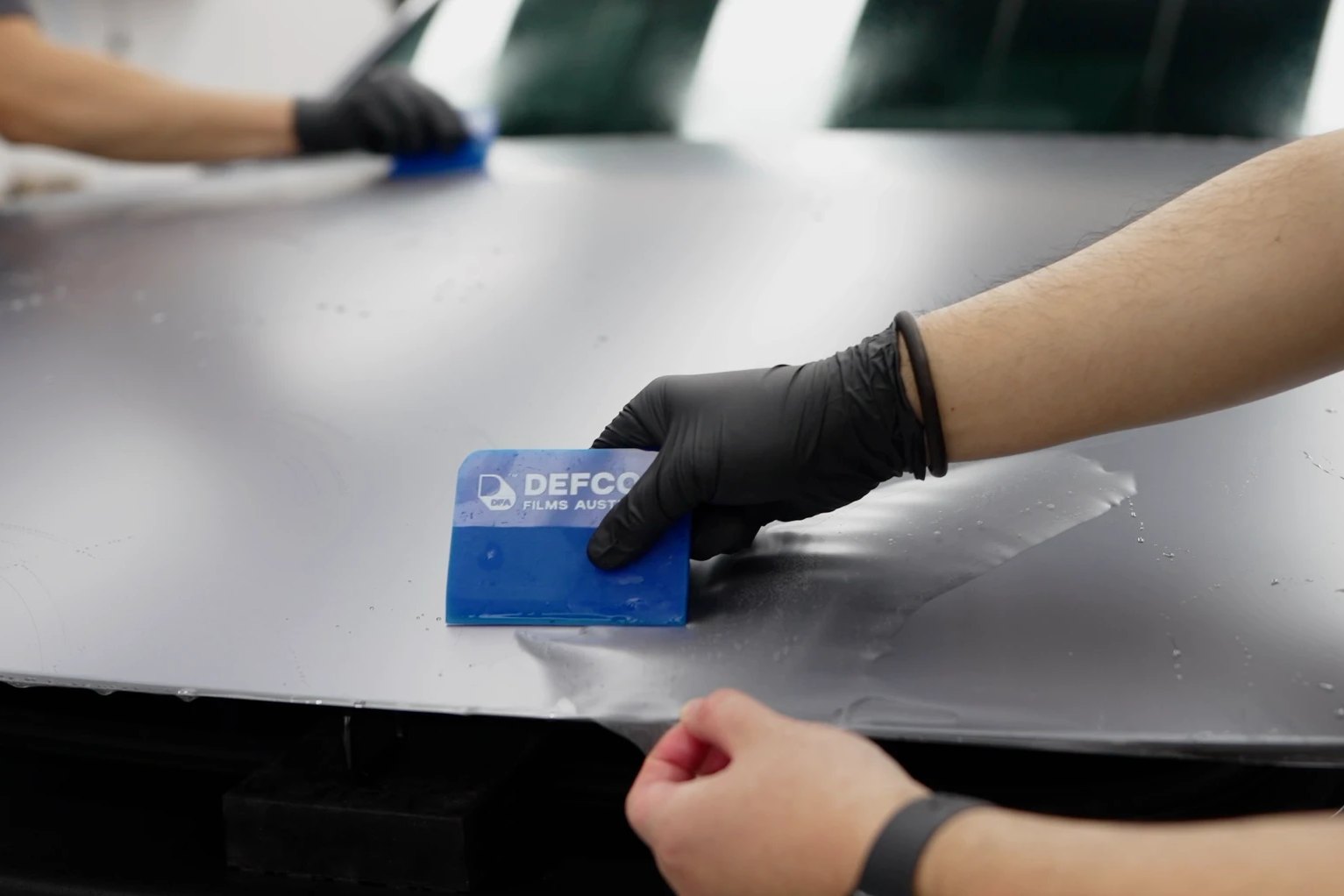
How Long to Wait After Paint for PPF on a Resprayed Panel
There is no single number for how long to wait after paint for PPF. The wait depends on the paint system the panel shop used and whether the panel was baked, so the first job is to get that information from the painter in writing. On installer forums the answers run from a day after an oven bake to 90 days for air-dried paint, and the most common working figure is around 30 days. What matters more than the number is that a resprayed panel is outside any film supplier’s paint warranty, so the installer carries the risk if the paint lifts later.
Why a resprayed panel is a different job from factory paint
Factory paint goes on a bare body in the plant, before trim and wiring are fitted. A panel shop is painting a finished car, often over filler and primer, and the repair usually includes a blend into the surrounding original paint. Those blend lines are often where film edges end up on a bumper or guard.
The Defcon Warranty and Defect Resolution Guide draws the line clearly. It says no paint warranty applies to resprayed, refinished or aftermarket paint systems, and that installers are responsible for identifying signs of previous paint repairs before installation. For confirmed OEM factory paint damaged by the film adhesive, Defcon may assess the incident and cover reasonable repainting costs where liability is accepted. That cover does not extend to a respray, whatever the wait time.
The guide also explains where paint lifting on removal usually comes from: insufficient adhesion between paint layers, or paint already compromised by stone chips, impact damage, previous repairs or clear coat failure. A rushed respray under film is one of the more likely ways to end up there.
What paint data sheets tell you, and what they leave out
Paint makers publish dry times for each product, and installers should read them before quoting. Axalta’s Cromax Premier LE8700S clearcoat page lists 16 hours air dry to handle and a force dry cycle of 30 minutes at 140°F, which is 60°C. Its LE5600S air dry clearcoat is sold as able to be assembled and polished within 2 hours of application, with infrared drying not recommended.
Neither page gives a time for applying adhesive film over the clear. Handling and polishing times tell you when the surface is hard enough to touch and cut, not when solvent has finished leaving the paint. A film with a pressure-sensitive adhesive sealed over the panel slows that release, and a common result is haze or small bubbles that show up days after delivery. Our post on edge lifting, silvering and bubbles covers how to tell those faults apart from a film defect.
So the data sheet is a starting point. It tells you which product went on and whether the panel was baked, and that is what you need to set the wait.
A wait-time checklist and what to tell the customer
When a customer books film on a car that has just come out of a panel shop, ask these questions before you give a date:
- Which paint brand and clearcoat product was used on each repaired panel?
- Was the panel baked in a booth or left to air dry, and on what date was it painted?
- Has the painter given a written time before film, wax or coatings can go on?
- Will the panel shop stand behind the paint if it lifts when the film is removed in future?
If the painter gives a time in writing, use it and record it on the job card. If nobody can say, the 30 day figure that many detail shops quote is a reasonable floor for baked paint, and longer is safer for air-dried work. A Rennlist thread on this exact question shows how wide the advice runs: one owner was told one day after the oven by a paint rep, another was told 30 days by a certified body shop, and several waited 60 days.
Before committing the full panel, a small test helps. Apply an offcut in a low area, such as the lower edge of a door, leave it for a few days, then lift it slowly with controlled heat. If the clear marks, softens or lifts with the film, the panel is not ready.
Most owners booking film after a repair want it on before the car goes back into daily use. The honest message is that the film can go on once the painter confirms the paint is ready, that resprayed panels are not covered by the film supplier’s paint warranty, and that the shop is waiting because lifting paint later costs everyone more than a few weeks now.
Under the Australian Consumer Law, the ACCC states that service providers must carry out all services using an acceptable level of care and skill. Filming a panel the painter has not cleared, without telling the customer the risk, is hard to defend against that standard. Writing the wait time and the painter’s advice on the quote protects the shop.
The same conversation comes up on new cars, where owners ask whether film affects the factory warranty. Our article on whether PPF voids a new car warranty covers that side.
If you want to see how a film behaves on refinished paint in your own bay before you take on repair work, request a free Defcon sample roll and test it on a painted test panel alongside factory paint.
Prep and install on refinished paint
Once the wait is over, the install follows the same five stages as any other job in the Defcon PPF installation guide: preparation, patterns, placement, heat work and registration. Two steps need more care on refinished paint.
Preparation first. Remove any polish oils or glaze the panel shop used to finish the job, then clean with DFA Surface Cleaner. A clean, contaminant-free surface is a warranty condition for the film itself, even though the paint underneath is not covered.
Then reduce grab. Fresh refinish paint gives you less margin if film has to be lifted and repositioned, so a tack reducer such as Defcon Sophie helps on complex panels and tight areas. The warranty guide lists Sophie as recommended best practice during installation. Keep heat moderate around blend lines and avoid wrapping edges hard over a repaired area.
Register the job through e-Warranty as usual, and note which panels are refinished and the date they were painted. That record matters if the owner raises a paint issue years later.
Frequently asked questions
How long should I wait after a respray before applying PPF?
Use the painter’s written time for the paint system they used. Without one, about 30 days is the figure most detail shops quote for baked paint, with longer for air-dried paint. Forum advice ranges from one day after an oven bake to 90 days.
Does the Defcon paint warranty cover resprayed panels?
No. The Defcon warranty guide states that no paint warranty applies to resprayed, refinished or aftermarket paint systems, and installers are responsible for spotting previous repairs before installation.
What happens if PPF goes on before the paint has cured?
Solvent still leaving the paint can show up as haze or small bubbles under the film, and the paint is more likely to lift with the film when it is removed. A small offcut test on a low panel shows whether the clear is ready.