

PPF Kits or Bulk Rolls: Which Should a Shop Stock?
PPF kits or bulk rolls is really a choice between three ways of working: buying pre-cut kits for each car, hand-cutting bulk film on the car, or buying bulk rolls and cutting your own kits on a plotter from a pattern library. For a shop doing regular volume, the third option usually wins, because it keeps blades off the paint like a pre-cut kit while buying film by the roll. Pre-cut kits suit a shop doing the odd job. Hand-cut bulk suits experienced installers on custom work.
Option one: buy pre-cut kits per car
A pre-cut kit arrives with every panel shaped for one model. The installer cleans, positions and squeegees, with little trimming on the car. That makes kits the gentlest way to start: less skill needed at the edges and almost no risk of cutting into the paint.
The trade-offs are stock and timing. Each kit fits one model, so a shop either holds kits for the cars it sees most or waits for delivery after the booking. Kits for new models, older cars and low-volume vehicles may not exist yet. And the film inside is whatever the kit maker uses, which may not be the film the shop wants to warrant.
Option two: hand-cut bulk film on the car
Bulk installation means laying film from the roll over a panel and trimming it in place. Skilled installers like it because they can wrap edges deeply and handle any vehicle, including custom bodywork. It needs no software or plotter.
It is also where most paint damage starts. Wikipedia’s overview of paint protection film notes that installing without a plotter, by bulk installing film from the roll, is a risk, and the reason is simple: every trim is a blade on clear coat. Bulk work also uses more film per car, because each panel is cut oversize and trimmed back.
Installers on the Tesla Motors Club forum have argued both sides since at least 2021: some say workmanship matters more than the cutting method, others that a plotter cut set with extra margin gets coverage close to bulk with less risk. Both views point to the same thing. The method has to suit the installer’s skill and the shop’s volume.
Option three: bulk rolls cut into your own kits
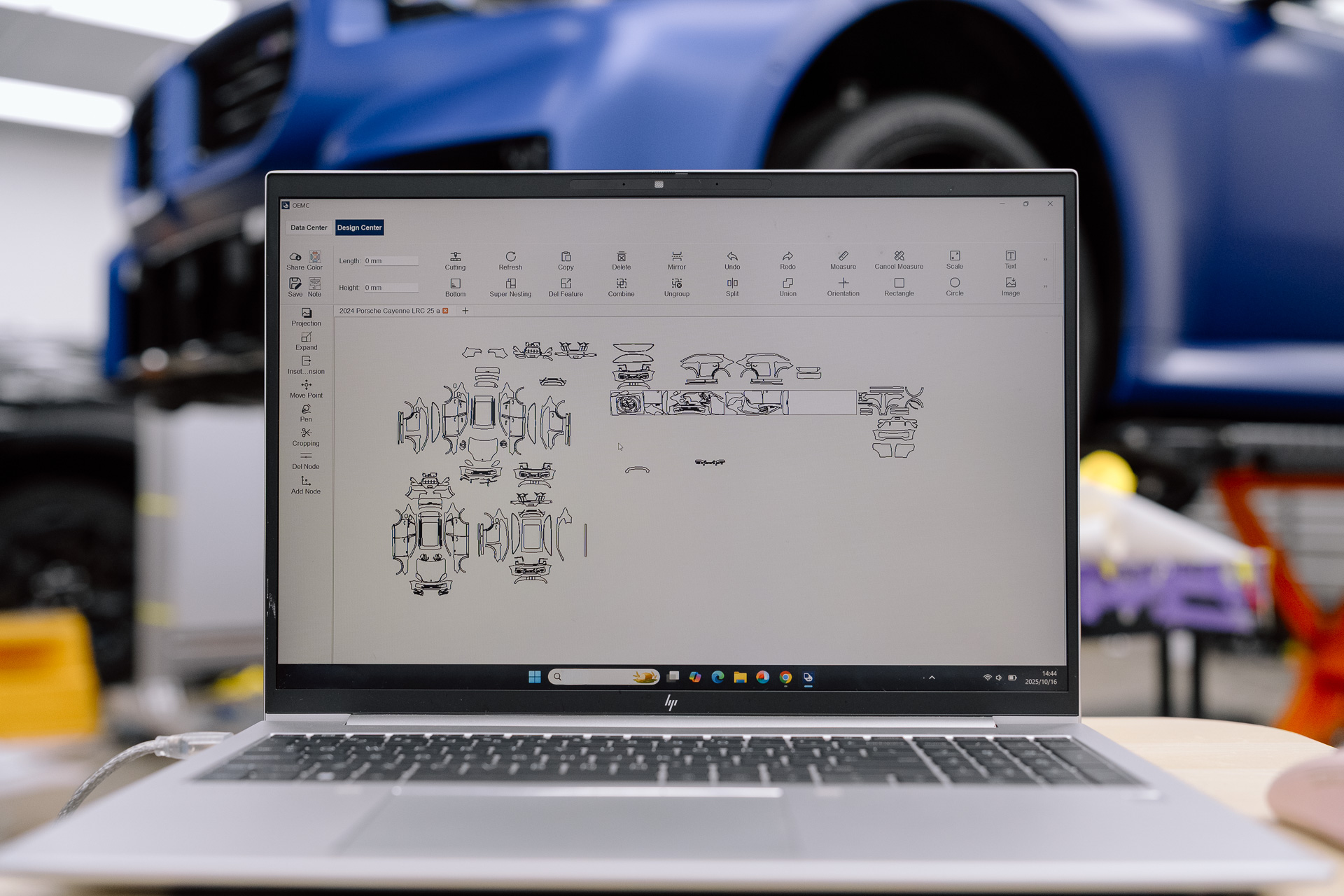
A plotter with pattern software turns a bulk roll into kits on demand. The shop picks the vehicle in the software, nests the panels on the roll to cut waste, and the plotter cuts them before the car arrives. The installer gets the low paint risk of a pre-cut kit, and the shop buys film by the roll.
Defcon supplies this as one setup. OEMC pattern software provides licensed vehicle templates refined for Australian models, and the DFA Plotter cuts them in-house, off the paint. The cutting software and plotter page explains how the two work together. Many installers add extra margin to a template in the software where they want the edge wrapped further.
The costs to weigh are the plotter itself and the monthly software subscription. Against that, the shop stops paying a kit margin on every job and stops waiting for kits to arrive. At low volume a plotter may not pay for itself. Once a shop is booking film work every week, it usually does.
Questions worth asking before choosing a setup: how many film jobs the shop books in a month, which models come through most often, who will run the plotter, and which film the shop wants its name on when a customer asks about the warranty. The answers usually make the choice obvious. A shop booking film once a month has different needs from one booking it every day, and buying equipment ahead of demand ties up money that could go into stock and training.
Which suits which shop
- Tint shop or detailer adding PPF. Start small. A few test jobs on common models tell you whether demand is there before buying equipment.
- Shop doing PPF every week. Bulk rolls plus a plotter and pattern software. Lowest film cost per job and no waiting on kits.
- Experienced installer on custom or rare cars. Bulk film by hand where no pattern exists, with great care at the trim lines.
- Dealership pre-delivery work. Plotter-cut kits for the models on the lot, so jobs fit the delivery schedule.
For a shop moving into PPF, the Defcon Starter Pack bundles a plotter, an OEMC subscription and Glanz and Frozen rolls. New staff can learn on the Practice Pack before touching a customer car.
Working out film use per roll
Whatever the method, film cost per job comes down to how much of the roll ends up on cars. A Defcon roll is 1.52 m by 15 m. The roll size guide shows how to estimate jobs per roll and where offcuts go. Tracking actual metres used per job for a month gives a far better number than any estimate, and it shows quickly whether plotter nesting is saving film.
Frequently asked questions
Are pre-cut PPF kits as good as bulk film?
The film can be the same; the difference is how it is cut. Kits keep blades off the paint but may leave slightly shorter edges. Bulk film allows deeper wraps but needs trimming on the car.
Do I need a plotter to start doing PPF?
No. Many shops start with a few jobs to test demand. A plotter makes sense once film work is regular enough to cover the equipment and software subscription.
Can I cut kits for Australian models?
Yes. OEMC pattern software provides licensed vehicle templates refined for Australian models, cut in-house on the DFA Plotter.