

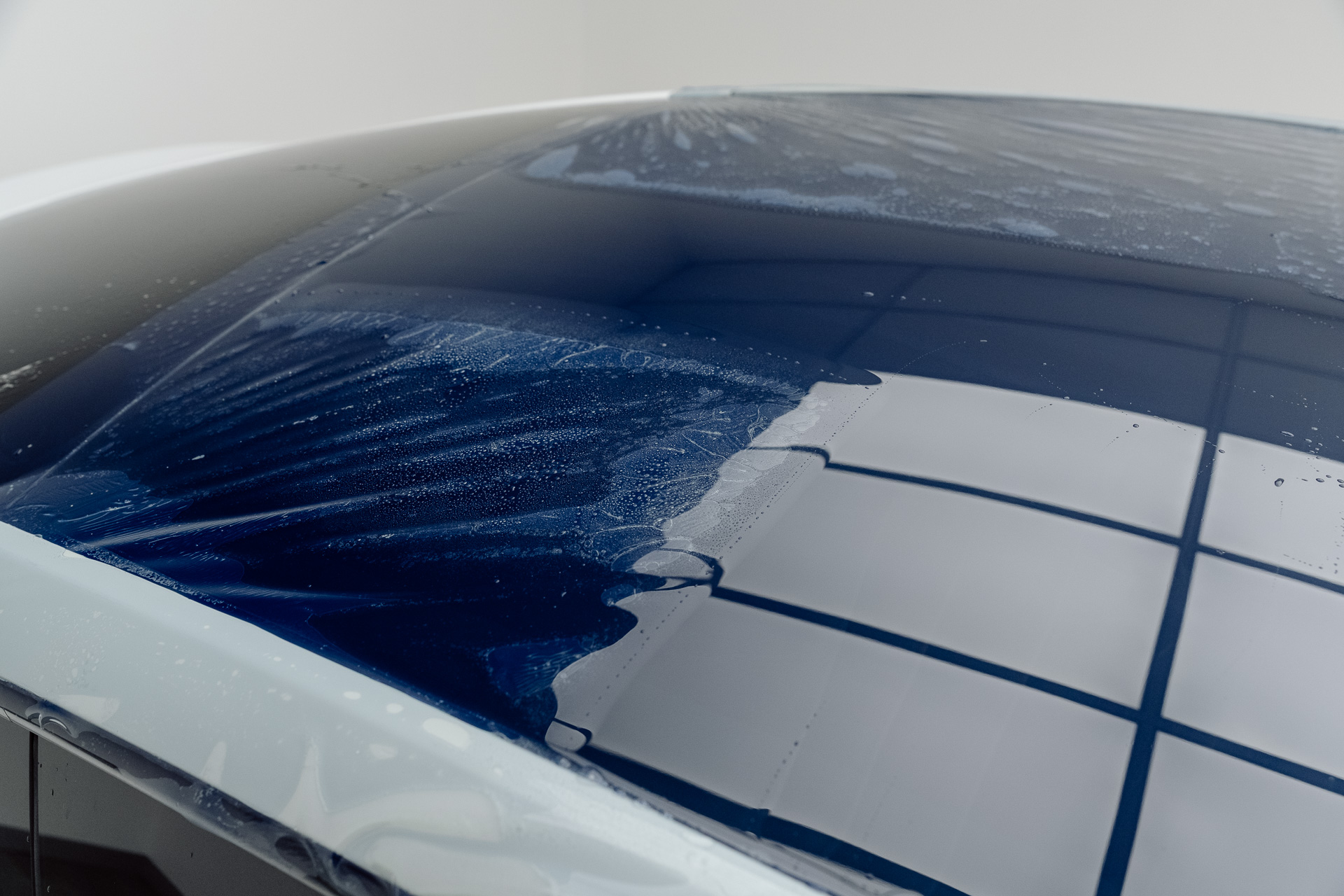
PPF Hail Damage: What Film Stops and What It Cannot in Storm Season
Paint protection film does not stop PPF hail damage in the form most customers fear: a dented panel. Hail big enough to dent steel or aluminium will dent it through the film, because a TPU film such as Defcon Glanz, about 190 microns thick, sits on the paint and does not stiffen the metal underneath. What film does well in a storm is take the surface damage: the chips, scuffs and fine marks from small hail and wind-blown grit that would otherwise go straight into the clear coat. That is the honest answer installers should give, and storm season is when they get asked.
South-east Queensland had its first serious hail of the season on 27 October 2026. ABC News reported stones of 3 to 7 centimetres at Yamanto, Flinders View, Ripley and Mudgeeraba, with the Bureau of Meteorology warning for Logan, Ipswich, the Gold Coast and Brisbane City among other areas.
The year before shows what a bad season costs. The Insurance Council of Australia put insured losses from declared extreme weather in 2025 at 4.8 billion dollars, more than 4.1 billion of it in Queensland, with the November storms alone producing almost 93,000 claims. Owners who lived through that, or whose neighbours did, now ask whether film is worth adding for hail. Shops supplied through the Brisbane and Gold Coast programs will hear it at the counter first.
What the Bureau’s hail sizes mean for a filmed panel
The Bureau of Meteorology classes a thunderstorm as severe when it brings hail of 2 cm or more, about the size of a two dollar coin, and adds the words giant hail to a warning when stones of 5 cm or larger are expected, according to its severe thunderstorm explainer. Those two thresholds give installers a plain way to explain film to a customer.
- Under 2 cm: small hail and the grit that comes with storm winds. This is where film earns its place, because the marks are in the surface, not the panel shape.
- 2 cm to 5 cm: severe hail. Panel dents become likely, and film will not prevent them. The film can still hold the paint surface together over the dent, which matters for the repair.
- 5 cm and up: giant hail. Roofs and windscreens take structural damage. No protection film changes that outcome; covered parking does.
Giving the customer the Bureau’s own sizes keeps the conversation factual. It also stops the film being sold on a promise the installer cannot keep.
Where film earns its keep in a storm
The numbers on the specifications page explain what film can absorb. Defcon Glanz is aliphatic TPU at 190 microns ±10% total thickness, with puncture resistance close to 10 kg on a single point and a 13 micron self-healing top coat. The puncture figure is the one that matters for small hail and debris: it describes a sharp, concentrated hit, which is what chips paint.
The self-healing coat handles the lightest marks. Scratches that stay within that top coat close up with heat, while anything that cuts through it means replacing the affected section. After a storm, the fine scuffs on a filmed bonnet are often gone after a warm day, and the same marks on bare paint would need polishing.
Glass is the other place film makes a real difference. On an EV, the panoramic roof is the largest exposed surface and the most expensive panel to replace. Defcon Crystal Shield is a clear film made for glass, engineered to absorb impacts on glass roofs from hail stones, road debris and stone chips, without the visual distortion standard PPF creates on glass. Shops doing this work can order through the EV glass protection film supplier program. The same rule applies as on paint: it reduces damage from smaller impacts, and nobody should describe it as hail proof.
Ceramic coating gives no impact protection at all, which is worth saying when a customer asks whether a coating would do the same job. The PPF vs ceramic coating page sets out that difference for the counter.
How to word the hail conversation at the counter
Customers in hail areas tend to ask one of two things: will the film stop hail, or will it stop me needing a repair. The answer to both is no for large hail, and the quote should say so in writing. A one line note such as “film reduces chips and surface marks from small hail and debris; it does not prevent dents from severe hail” protects the shop when a dented car comes back.
The better sell in Queensland is daily wear. The same customers who worry about hail drive through roadworks and park under trees. Film protects against those every day of the year, and the new car value question is easier to answer on that basis than on a storm that may never hit.
Insurance comes up too. Hail damage to a car is an insurance matter, so point the customer to their own policy and keep the shop out of advice on cover.
After the storm: filmed cars that come back damaged
Hail damage to film is impact damage, not a material defect. The warranty and defect resolution guide deals with manufacturer defects, and an installer who explains the difference before the job avoids an argument after it. Register every install through e-Warranty so the original install date and film are on record when a customer returns after a storm.
Repairs need care. The warranty guide notes that paint can lift during film removal where it has been compromised by impact damage, previous repairs or clear coat failure. A panel that has been dented and cracked under the film is exactly that case. Photograph the panel, check the paint at the dent before lifting the film, and talk to the repairer before removal so the customer knows what to expect. Refilming the repaired panel is new work and should be quoted that way.
Shops that want to see how the film behaves before stocking it can request a free sample roll and run their own impact and heat tests on a scrap panel.
FAQ
Does paint protection film stop hail dents?
No. Film protects the paint surface, not the shape of the panel. Hail of 2 cm or more, which the Bureau of Meteorology classes as severe, can dent steel and aluminium panels through the film. Film reduces chips and surface marks from smaller hail and storm debris.
Is hail damage to PPF covered by the film warranty?
Hail is impact damage, which is different from a manufacturing defect. The Defcon warranty guide sets out how defects are assessed and what falls outside cover, and installers should walk customers through it before the job.
Can film protect an EV glass roof from hail?
A glass protection film such as Crystal Shield is engineered to absorb impacts on glass roofs from hail stones and road debris. It reduces the risk from smaller impacts but does not make a roof hail proof, and covered parking is still the only reliable defence against giant hail.