

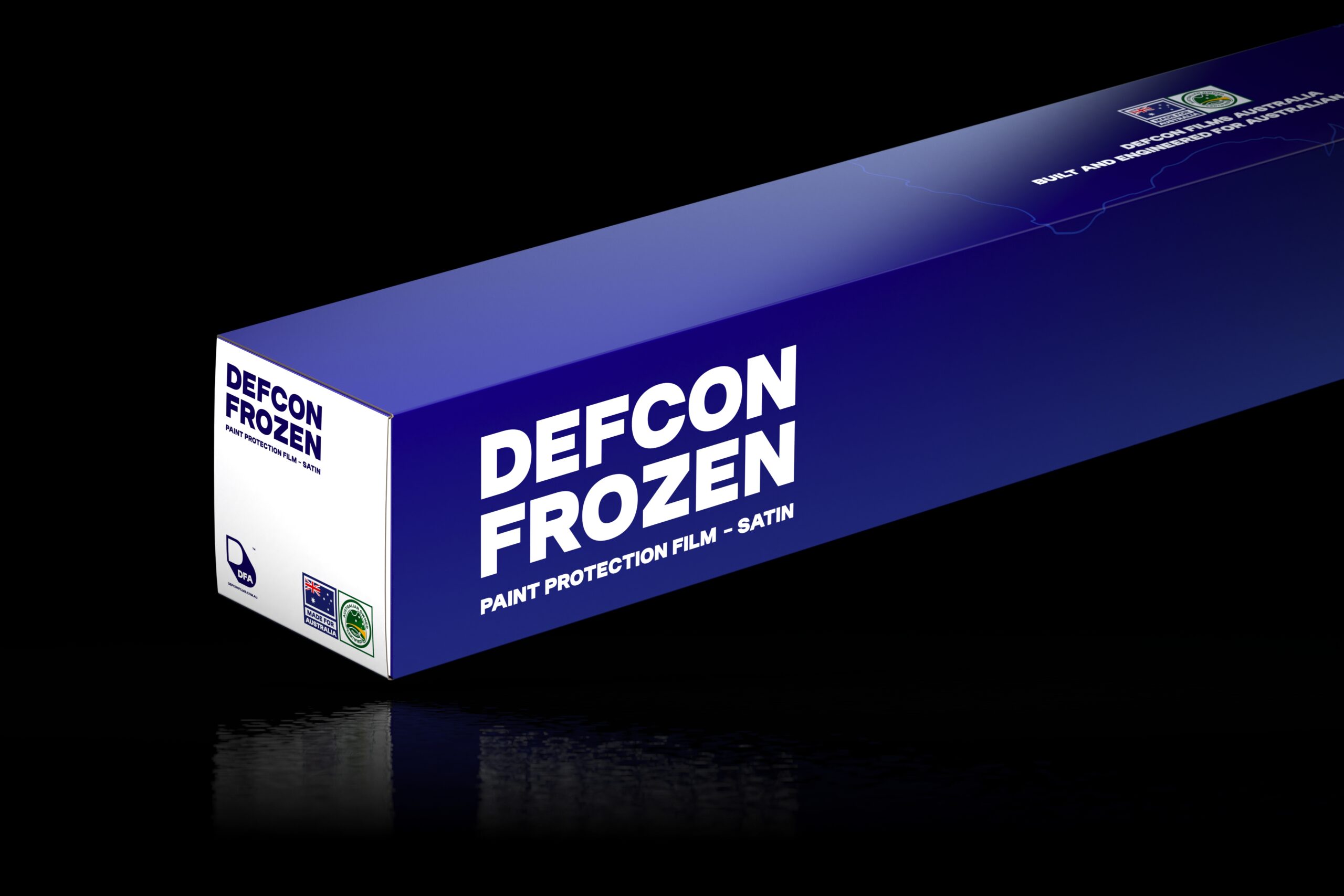
How to Quote Satin PPF: What Changes When the Customer Wants Frozen
Satin paint protection film is a small share of most workshops’ PPF work and a large share of their awkward quotes. The customer usually knows exactly what they want, the car is often a factory matte finish that cannot be polished back if something goes wrong, and the film has to keep the surface looking satin for years under Australian sun. This post covers the three things that actually change when you quote Defcon Frozen instead of a gloss film, and the two things that do not.
1. The finish is the product, so the top coat matters more
On a gloss car, minor wash marks on the film disappear with heat and nobody notices the film itself. On a satin car the film is the finish. Frozen is built with a top coat formulated to match the texture of an OEM satin paint job, and its 13-micron self-healing layer repairs light scratches under heat without changing the satin character of the surface. Quote it as a finish product, not as a clear layer: show the customer a sample panel next to their paint before you cut anything.
2. UV exposure is the risk you are pricing in
Satin finishes are more sensitive to UV than gloss. Uneven fading and surface discolouration show up sooner if the film is not built for it. Frozen uses aliphatic TPU with a UV-resistant top coat for that reason, and Defcon film is lab tested by ARPANSA in Melbourne for UV protection performance. The construction is the same 190 microns, plus or minus 10 percent, about 7.5 mils, with single-point puncture resistance close to 10 kg, so you are not trading protection for texture. That is the line to use when a customer asks why satin costs more than they expected.
3. Matte paint cannot be corrected, so the install has to be right first time
Polishing is not an option on factory matte paint. That makes prep and pattern accuracy the job. Frozen runs through the same workflow as the rest of the range: patterns cut in house on the plotter with OEMC software, surface prep with DFA Surface Cleaner, and the easy-tack adhesive that slides during positioning and grips once placed. If your team has not done satin work before, the Defcon Practice Pack lets them train on real film without touching customer stock.
What does not change
Two things stay exactly as they are for gloss work. Frozen carries the same 10-year limited warranty as Defcon Glanz, under normal use and proper installation. And every roll and installation is registered through the e-Warranty system within 7 days of the customer invoice, with cover that transfers to the next owner while a valid record exists. Quote the warranty the same way you would for a gloss job.
Where satin work comes from
Two customer types drive it. Owners of factory matte cars, where film is the practical way to protect paint that polishing cannot repair. And owners of gloss cars who want a stealth conversion, where Frozen changes the look and protects at the same time. Both are premium jobs, and trade accounts can source volume through the satin PPF supplier program.
Frequently asked questions
Is satin PPF thinner than gloss PPF?
No. Defcon Frozen uses the same 190-micron aliphatic TPU construction as Glanz, with the same self-healing top coat thickness and puncture resistance. The difference is the texture of the top coat, not the protection underneath.
Can satin PPF go on a gloss car?
Yes. That is the stealth conversion market. The film gives a gloss car a satin look and protects the factory paint at the same time, and it removes cleanly if the owner wants the gloss back.
How do I try Frozen before ordering full rolls?
Request a free sample roll and run it through your own installation process. Limited sample rolls are available for professional workshops.