

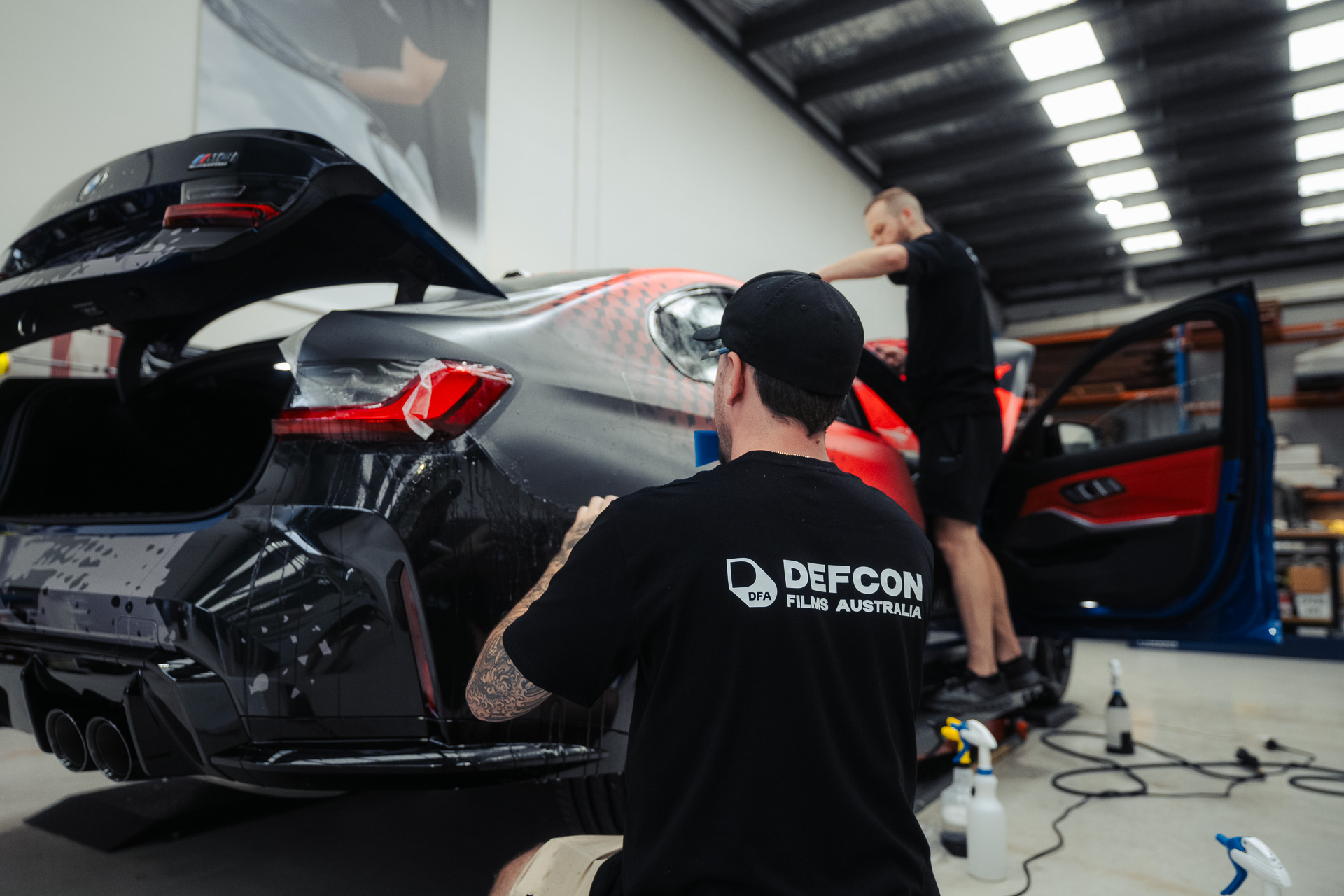
PPF Cost Explained: How a Shop Builds a Quote That Holds Up
PPF cost in Australia varies widely because a quote is built from five parts: the film, how much of the car is covered, the labour, the paint preparation, and the warranty behind the job. Two shops quoting the same car can be far apart because one includes paint correction and wrapped edges and the other does not. For an installer, the useful work is building each quote the same way every time and explaining those parts to the customer, so the price makes sense before anyone compares it with the shop down the road.
The five parts of a PPF quote
- Film. The roll price, divided across the panels it covers, plus an allowance for offcuts and mistakes.
- Coverage. Front bumper only, front end, track pack, or full car. Coverage drives both film and labour.
- Labour. Prep, cutting, installation, edge work, curing checks and handover.
- Paint preparation. Decontamination is always needed. Paint correction on a used or neglected car is a separate, often large, line.
- Warranty and aftercare. Registration, follow-up checks and the time set aside for warranty work.
Business Victoria lists the basic ways to set a price: the cost to provide the service plus a percentage, what the customer is prepared to pay, demand, and what competitors charge, and it advises using a combination of all of them. Its pricing strategy guide also recommends reviewing prices about once every three months, which suits a trade where film and freight costs move.
Film: work out cost per job, not per roll
A Defcon roll is 1.52 m wide and 15 m long, which is 22.8 square metres of film. The roll size guide shows how the roll size and the offcuts decide how many jobs one roll covers. Divide the roll price by realistic jobs per roll, not by the theoretical maximum, because curved panels such as bumpers and mirrors waste more film than a flat bonnet.
Cutting method changes the film cost too. Shops cutting with pattern software and a plotter nest panels on the roll and waste less than shops cutting by hand on the car. Roll prices for every Defcon line are listed ex. GST in the online shop, so the film line in a quote can be checked against a published figure.
Labour and paint preparation
Labour is usually the largest part of the price, and it is the part customers see least. A clear quote breaks it down into preparation and installation time, so the customer understands why a full car takes days rather than hours.
Business Queensland publishes pricing tools for service businesses, including a way to work out a realistic hourly rate that covers wages and overheads as well as the time that cannot be billed. That hourly figure, multiplied by realistic hours per coverage package, is a firmer base for labour than copying a competitor’s package price.
Paint preparation is where quotes differ most. A new car straight from delivery usually needs decontamination only. A three year old daily driver may need correction before film goes on, because film seals in whatever is underneath it. Quoting correction as its own line avoids a dispute when the customer sees swirl marks under new film.
Rework belongs in the price as well. A panel that lifts, a cut that lands short or a contaminated edge costs film and a second visit. Shops that track how often that happens can add a small, honest allowance to every quote instead of losing money on the jobs that go wrong. The edge lifting and silvering guide covers the most common causes.
Coverage options customers can compare
Customers compare packages more easily than line items. Most shops quote three or four:
- Front bumper and headlights. The entry option for stone chips.
- Front end. Bumper, bonnet, front guards, headlights and mirrors. The most common job.
- Track pack. Front end plus sills and rear impact areas, for highway and gravel drivers.
- Full car. Every painted panel, required for satin or colour changes with Frozen or Spectra.
Showing these side by side lets the customer choose the level of protection, and it keeps the conversation on value rather than on a single number.
Explaining the price to a customer
Customers often arrive with a price from another shop. Rather than matching it, explain what is in yours:
- which film is used, and that it is registered to the car on e-Warranty
- whether edges are wrapped or cut short
- whether paint correction is included
- what happens if a panel lifts in the first weeks
Business Victoria also notes that a price which does not say plus GST is assumed to include it. State clearly whether a quote is GST inclusive, especially when the customer is comparing it with a quote that is not.
Shops setting up their pricing for the first time can start with a free sample roll to time a test panel, and buy PPF rolls once the package prices are set.
Frequently asked questions
Why does PPF cost so much more than a coating?
Film is a physical layer cut and fitted panel by panel, so the price is mostly skilled labour plus the film itself. A coating is applied as a liquid in far less time.
Why do PPF quotes vary between shops?
Coverage, film, paint correction, edge work and warranty all differ. Comparing the line items, not just the total, shows whether two quotes are for the same job.
Is front end PPF enough?
For most daily drivers, the front end covers the panels that take most stone chips. Full coverage suits cars kept for many years, parked on the street or getting a satin or colour finish.